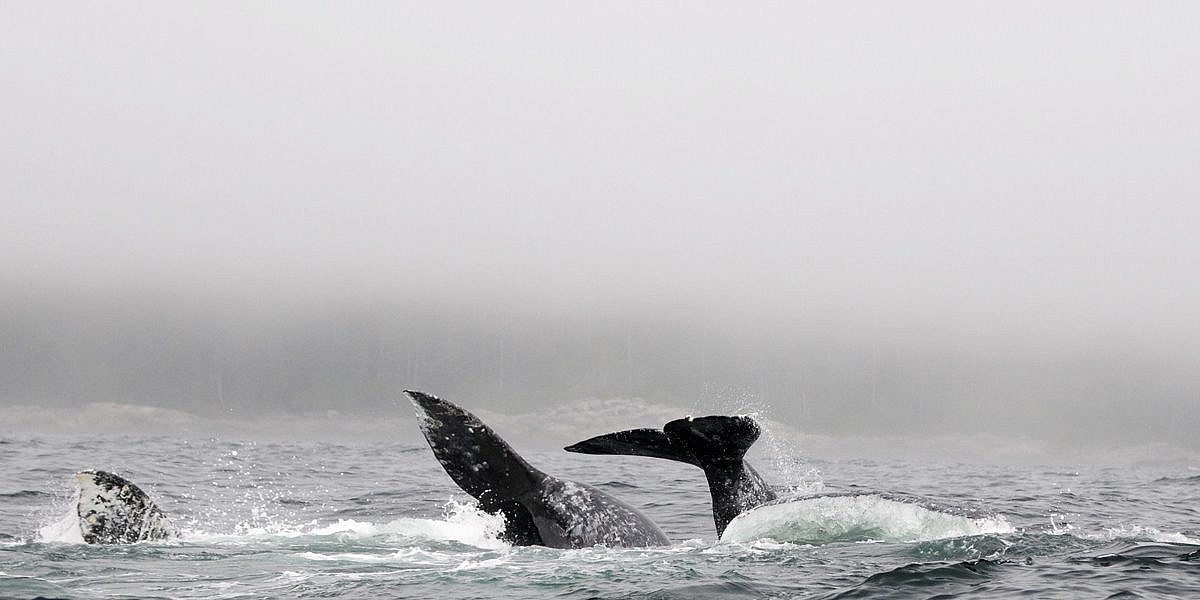
Gray Whales


freddy

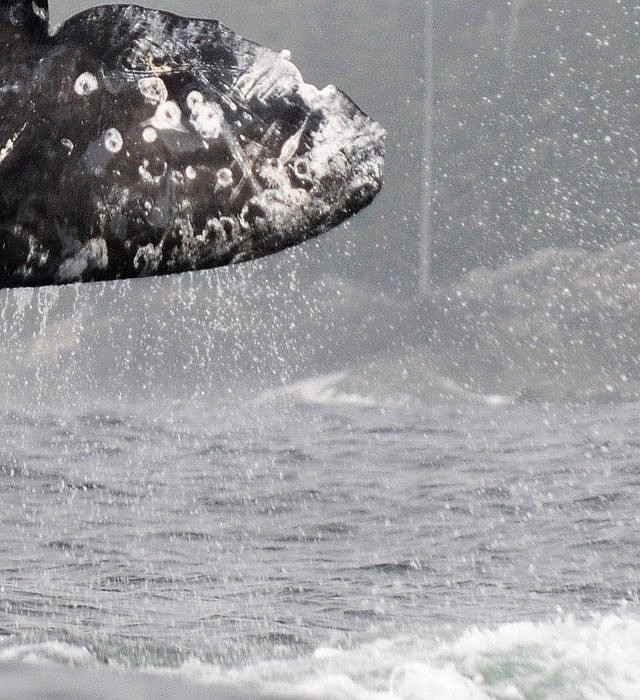
Inhabiting both the Eastern and Western shores of the Pacific Ocean, the Gray Whale is the first "friendly whale" to approach and rub on boats, and at times allow passengers to pet them.  This impressive marine mammal has long been the subject of human interest, most notably being the first whale, along with the Right Whale, to be aggressively hunted during the first half of the 20th Century.  Following decades of extensive whaling, the Gray Whale herds that inhabit both the Eastern (North American) Pacific shores and the Western (Asian) Pacific waters have been declared extinct at least once in the past 100 years.  These two remaining Grey Whale herds (there were at one time, four global herds) have persevered despite great odds against their survival.
 
The Western Pacific Gray Whale Herd population has suffered immensely due to massive whaling during the early 20th Century by Japan, theU.S., Norway, and the Soviet Union.  By the mid 1950's, scientists were convinced that this herd had become extinct, however by the 1960's and 1970's there were a few sightings of this herd.  During the 1990's about 200 Asian Pacific Gray Whales were observed in the Russian Sakilin Islands, reviving hope for the survival of this battled herd.
 
The Eastern Pacific (North American) Whale Herd population resides along the western shores of North America from it's winter calving lagoons of Baja Mexico all the way up to the Bering Strait and the Arctic Seas.  A robust and healthy herd, the Eastern Pacific Gray Whale population is indeed one of the most observed, studied, and loved whale populations on earth.  One of this whale's most predominant features is it's annual breeding and feeding migratory pattern, which sees upwards of 20,000 Gray Whales congregate in the shallow lagoons of Baja California (Mexico) to breed, followed by a massive northern migration along the North American Pacific shoreline in the spring.  This fantastic wildlife spectacle, which boasts a 20,000 km (12,500 mile) round-trip, is considered by some scientists to be the longest migration of any mammal on earth.
Grey Whale Facts

  • Scientific Name: Eschrichtius Robustus
  • Common Name: Gray Whale
  • Length of Female: 12.6 -14.1 metres (41-46 feet)
  • Length of Male: 11.7 - 13.2 metres (38-43 feet)
  • Weight: A 13.4 metre (43.8 foot) Female:  34.6 tonnes,  excluding fluids and blood.
  • Swimming Speed: 4-6 knots
  • Longevity: 50 years
  • Gestation Period: 12-13 months
  • Size of Newborn Calf: 4-5 metres (13-16 feet)
  • Distribution: North American Coast;  Mexico to Bering, Arctic Seas. Asian Coast;  Sea of Okhotsk to Japan, Korea. Atlantic Coast; Extinct 
  • Social Structure: Live in herd-like structures, similar to land mammals. Longest social bond is between mother and calf. Scientists suspect a highly complex social relationship exists.
  • Communication: Gray Whales communicate through a variety of low frequency sounds such as grunts, rumbles, moans, croaks, and loud clicks and bangs.  The function of these sounds is relatively unknown.
  • Foraging: Feeds on buried organisms and those just above bottom sediments.  Also: Planktonic Prey on kelp beds, in surf zones, shorelines, and shallow offshore banks. Gray Whales are a "Baleen" Whale; they do not have teeth, but rather have a filtering apparatus in their mouths.

Our Recent Tweets

  • We have a 1pm whale watching tour going out today! Transient Orcas, Humpback Whales, Gray Whales and Minke Whales sighted over the weekend! 2 days 21 hours ago
  • We have a whale watching tour going out at 1pm today with 5 seats left at the moment. Give us a call to book your seats @ 250 748 3800. 1 week 21 hours ago
  • Awesome day on the water with 50 resident orcas and 12 transient orcas. 1 week 3 days ago

"Worth A Trip No Matter Where You Are On the Island"

"We read about this company on trip advisor and made our reservations.The tour certainly lived up to the worthy praise that preceded it. We saw a pod of something like 30 whales!!"

- Clarke Family, Coburg, Ontario

Read More...

Flickr Gallery

DSC_0201Transient Encounter May 28thDSC_0430DSC_0020DSC_0053DSC_0068DSC_0089Warmland SunsetDSC_0019

Dedicated and Responsible

look before PWWA

As active members of the Pacific Whale Watch Association, we’re dedicated to research, education and responsible wildlife and whale watching.

Learn More

Email Newsletter icon, E-mail Newsletter icon, Email List icon, E-mail List icon
Sign up for our Whale reports and Newsletter