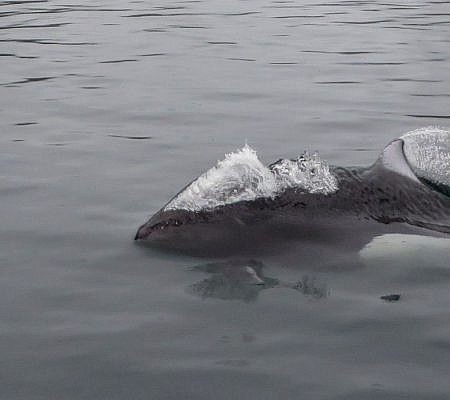
Killer Whales


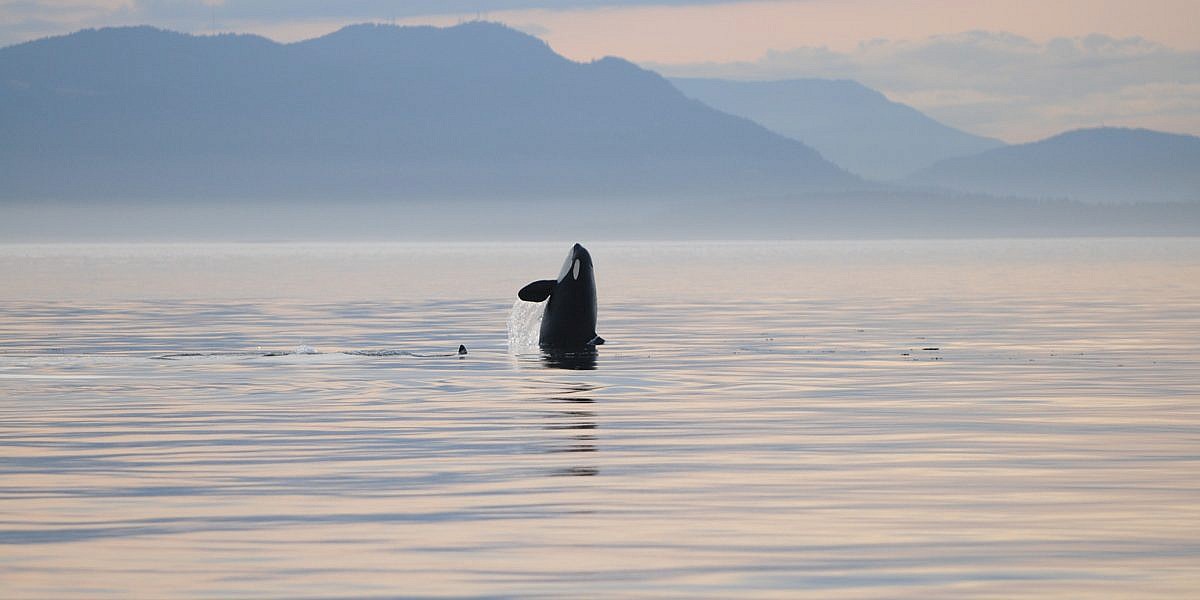


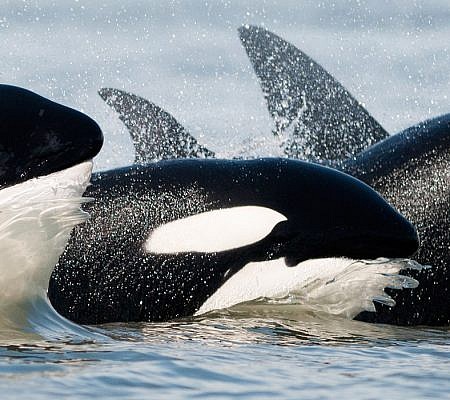
Orca whales are cetaceans, a large group of approximately 80 kinds of whales, dolphins, and porpoises. The largest member of the dolphin family (females can grow as large as 23 feet in length, while males can reach 32 feet), orca whales have highly developed brains, and like all dolphins, use sophisticated biological sonar called echolocation to find their prey and unique vocalizations to communicate. They are the most widely distributed mammal on the planet next to humans. Every population around the world have their own language, dialects, foods, culture and even physical appearance.
When the Southern Resident Community whales arrive in Haro Strait on the southeast shores of Vancouver Island, they “announce” their arrival to other whales already in the area with their highly developed vocal activity.
Orca whales are divided into three separate categories based upon geographical location and behaviour. It is speculated that these three distinct groups of orcas in the Pacific Northwest may be the result of food preference and availability.
Resident Orcas tend to have distinct and stable travel patterns and family structures, while Transient Orca Whales asknown as Biggs Killer Whales are more loosely organized. It is estimated that there are approximately 450 Transient Orca Whales living along the western North American seaboard from Mexico to the Bering Sea. Little is currently known about the third category, Offshore Orcas, although they are being actively studied by scientists. Discovered in 1991, the Offshore Orcas are most commonly seen 15 to 25 miles out at sea off Vancouver Island and the Queen Charlotte Islands. It is possible that this third category of whales is the ancestral population of the Northern and or the Southern Resident orca whales.
Orca whales generally live in groups known as pods, which are comprised of two or more females, calves, one or more males, and juveniles. These stable, matrilineal pods of orcas often consist of a mother, her offspring, and several generations of family members who travel together. Some offspring stay with their mother for life. This type of familial structured pod has been consistently observed in the Pacific Northwest. While all pods share common sounds, each pod also has its own distinctive sound.
With 46 to 50 conical shaped teeth that point slightly inwards and backwards, the orca is well adapted for hunting. While resident orca whales tend to feed on fish species such as herring or salmon, transient whales eat a variety of animals including smaller whales, penguins, porpoises, harbour seals, sea lions, squid and sharks. Orcas generally forage individually, although it is thought by scientists that a coordinated method of group hunting probably occurs.
Although very little is understood about the orca’s breeding habits, newborn calves have been observed throughout the year, indicating no particular breeding season. Orcas are considered to be sexually mature between the ages of 10 and 18 years of age, with females believed to be reproductively active into their 40’s. Post menopause, killer whales can live another 40-50 years! Only three known species on the planet live post menopause. Humans, short finned pilot whales and killer whales.The gestation period for an orca is approximately between 13 to 17 months, and a newborn calf is generally about 6-7 feet long, and weighs approximately 400 pounds.
When resting, orca whales generally maintain a slow swimming speed (2 knots or less), and synchronize their breathing with other whales within their social group. They also rest while laying almost motionless on the surface of the water. During these very quiet rest periods, orcas emit just a few discrete sounds, and scientists believe that one group member may remain more attentive than the remaining pod.